The way videos are created is undergoing a fundamental shift. For decades, video production followed a linear workflow—write a script, plan shots, film scenes, and then stitch everything together in post-production. Artificial intelligence is now compressing this entire pipeline into a single, intelligent process where scenes, pacing, visuals, and edits can be reasoned about together rather than handled as isolated steps.
This transition becomes especially clear when discussing the sora AI video generator, a concept that represents a new class of systems capable of understanding video at the scene level instead of just frame by frame. In practical terms, this approach is visible in platforms like Invideo, where Sora AI can autonomously generate scripts, map storyboards, create visuals, and assemble edits into a cohesive video flow. Rather than replacing creativity, this evolution reframes how creators think about storytelling, structure, and scale.
At its core, scene-level AI video is not just about faster output. It’s about intelligence that understands narrative intent—what a scene is meant to convey, how long it should last, and how it connects emotionally and visually to the next scene. This shift is quietly redefining what it means to “make a video” in the modern digital landscape.
Understanding Scene-Level AI Video Creation
Scene-level AI video refers to systems that treat each scene as a meaningful unit of storytelling rather than a collection of disconnected clips. Traditional tools typically focus on individual edits—cuts, transitions, and visual effects—leaving humans to manage narrative coherence. Scene-aware systems, by contrast, operate with an understanding of structure.
From Frames to Narrative Units
Early AI-driven video tools focused heavily on frames and pixels. They could generate short visual snippets or apply effects, but they lacked awareness of context. Scene-level AI changes this by grouping visuals, dialogue, motion, and sound into logical segments that serve a narrative purpose.
For example, a single scene might include a setting, an action, and an emotional tone. Scene-level systems can infer how long that scene should run, what visuals best support it, and how it should transition into the next moment. This allows videos to feel intentional rather than mechanically assembled.
Why Scene Awareness Matters
Storytelling depends on rhythm. A fast-paced introduction sets expectations, while a slower explanatory scene builds understanding. Scene-level AI video tools are designed to recognize these shifts automatically. They don’t just assemble visuals; they orchestrate flow.
This is particularly important in digital-first content, where attention spans are limited and clarity is essential. When scenes are intelligently structured, viewers experience smoother pacing and stronger narrative continuity.
The Sora AI Video Generator Approach to Video Creation
The second major shift comes from how the sora AI video generator operates at a conceptual level. Instead of asking creators to manually guide every step, this approach emphasizes autonomy and orchestration.
Autonomous Script-to-Scene Workflows
One defining characteristic of the sora AI video generator approach is its ability to move from an initial idea to a structured, scene-based video with minimal manual input. Instead of treating writing, visual selection, and editing as separate tasks, this system orchestrates them as a single, continuous workflow.
A simple prompt can result in a complete script that is automatically broken down into logical scenes, each with clear intent, pacing, and visual direction. This script-to-scene intelligence allows the video to develop naturally, with each segment building on the previous one rather than feeling fragmented.
Within Invideo, this autonomous workflow becomes especially apparent. Sora AI interprets the core message, translates it into a storyboard, selects or generates relevant visuals, and assembles edits that align with the narrative structure. The outcome is a video that feels deliberately planned rather than pieced together.
Storyboards as a Central Intelligence Layer
Storyboards traditionally act as a bridge between writing and filming. Scene-level AI elevates this concept by using the storyboard as a living blueprint. Each scene is defined not only by visuals but by purpose—introduction, explanation, emphasis, or conclusion.
This approach allows AI systems to make informed decisions about pacing, transitions, and emphasis. It also reduces the cognitive load on creators, who no longer need to micromanage every cut.
Editing as a Logical Outcome, Not a Manual Task
In conventional workflows, editing is often the most time-consuming phase. Scene-aware systems flip this dynamic. Once scenes are defined and aligned with intent, editing becomes a logical outcome rather than a separate craft.
This doesn’t eliminate creative control. Instead, it provides a strong baseline that creators can refine. The difference is that the heavy lifting—structure and flow—has already been intelligently handled.
How Scene-Level AI Is Changing Creative Roles
As AI takes on more structural responsibilities, the role of the creator naturally evolves. Rather than focusing on technical execution, creators can invest more energy into ideas, messaging, and refinement.
From Editors to Directors
With scene-level AI handling assembly, creators increasingly act as directors. They guide tone, narrative direction, and emotional impact while trusting the system to execute the mechanics.
This shift mirrors changes seen in other creative fields, where automation handles repetitive tasks and humans focus on higher-level decision-making. Video creation becomes less about software mastery and more about storytelling clarity.
Faster Iteration Without Creative Fatigue
Another significant benefit is speed. Scene-level systems make it easier to test multiple narrative approaches without starting from scratch. A creator can adjust the intent of a scene and regenerate variations quickly.
This rapid iteration is especially valuable in environments where content needs to respond to trends, feedback, or changing priorities. Instead of being locked into a single edit, creators can explore alternatives efficiently.
The Broader Ecosystem of AI Video Apps
The rise of scene-level intelligence is also reshaping expectations around AI video apps more broadly. Users no longer see these tools as novelty generators but as serious production environments.
Moving Beyond Clip Generation
Earlier generations of AI video apps often focused on short clips or visual effects. While impressive, these outputs were limited in scope. Scene-aware systems expand the use case to full-length narratives, explainers, and structured content.
This evolution aligns with how audiences consume video today—seeking clarity, coherence, and value rather than isolated visuals.
Integration Into Everyday Workflows
As AI video apps mature, they are increasingly integrated into everyday workflows rather than treated as experimental tools. Scene-level intelligence makes this integration practical by reducing friction and learning curves.
When a system can handle structure automatically, creators can focus on objectives rather than technical setup. This is one reason scene-level AI is gaining traction across diverse content needs.
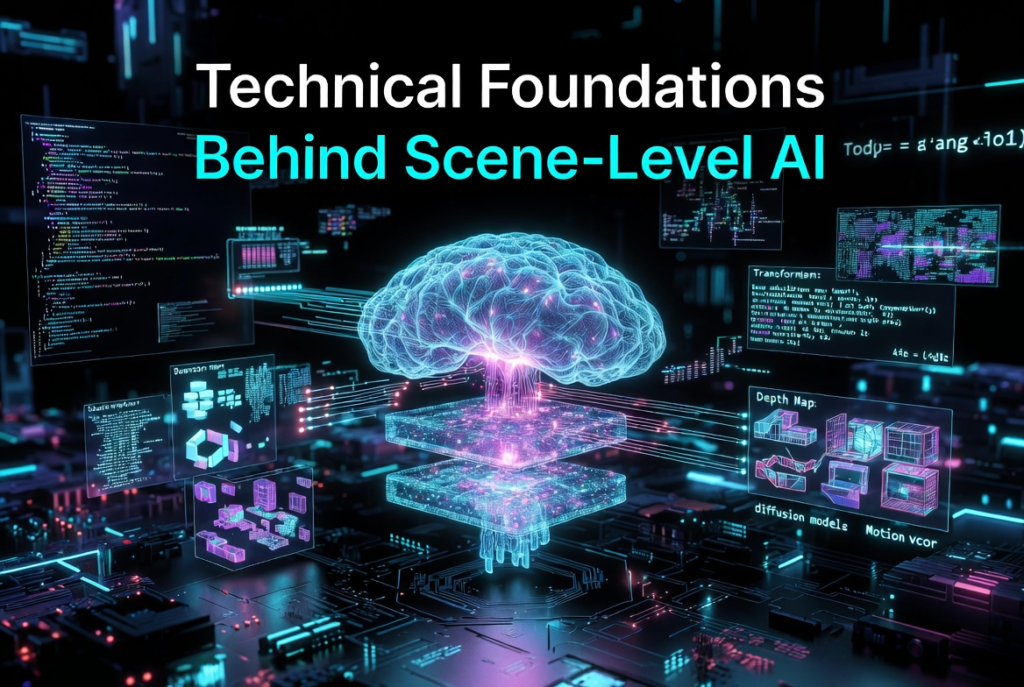
Technical Foundations Behind Scene-Level AI
While the creative impact is visible, it’s worth understanding the technical principles that enable scene-level video generation.
Multimodal Understanding
Scene-aware systems rely on multimodal intelligence—the ability to process text, visuals, motion, and audio together. This allows the AI to align narration with visuals and ensure consistency across scenes.
By understanding multiple data types simultaneously, the system can maintain coherence throughout the video rather than treating each element independently.
Temporal Reasoning
Another key component is temporal reasoning. Scene-level AI understands not just what happens, but when it should happen and for how long. This timing awareness is essential for pacing and viewer engagement.
Temporal reasoning enables smoother transitions and more natural storytelling, which are often difficult to achieve through manual automation alone.
Ethical and Creative Considerations
As scene-level AI becomes more capable, important questions arise around authorship, originality, and creative responsibility.
Maintaining Human Intent
Despite high levels of automation, effective use of scene-level AI depends on clear human intent. The quality of output still reflects the clarity of the input—ideas, goals, and narrative direction.
Rather than replacing creativity, these systems amplify it. They provide structure, but meaning still comes from human perspective.
Avoiding Homogenized Content
One concern often raised is the risk of content becoming uniform. Scene-level AI addresses this partially by allowing customization at the narrative level. By adjusting tone, pacing, and emphasis, creators can maintain distinct voices.
The responsibility lies in thoughtful use rather than passive acceptance of default outputs.
The Future of Scene-Level AI Video
Looking ahead, scene-level AI video generation is likely to become the standard rather than the exception. As systems grow more context-aware, they will better understand audience intent, platform constraints, and storytelling nuance.
The sora AI video generator model points toward a future where video creation is less about assembling parts and more about shaping ideas. With platforms like Invideo demonstrating how scripts, storyboards, visuals, and edits can work together autonomously, the boundaries between planning and production continue to blur.
Ultimately, the rise of scene-level AI video is not just a technical advancement—it’s a conceptual one. It challenges creators to think in scenes, narratives, and outcomes, ushering in a more intuitive and expressive era of video storytelling.